
Foundation cracks that grow by even a millimeter per season signal active soil movement. Call now. +1-866-476-1348
Home
Services ▼
#HeaderServicesLinks
+1-866-476-1348

Foundation Crack Repair in Charlotte, NC

Specialty
Structural Crack Repair
Methods
Epoxy + Carbon Fiber
Coverage
All of NC
Call for Assessment
Structural
Specialists

Structural Engineering

Foundation analysis and repair design

Epoxy Injection

Permanent structural crack bonding

Carbon Fiber Repair

Bowing wall stabilization systems

10-Year Warranty

Written coverage on all repair work

Foundation Crack Repair: What Every Homeowner Needs to Know

Not every crack you find in your foundation wall signals a structural problem, but every crack deserves a professional evaluation because the consequences of misclassifying a structural crack as cosmetic are serious. Our assessment process includes measuring crack width at multiple points, documenting the orientation precisely, checking for horizontal displacement at the crack face, and reviewing the soil and drainage conditions outside the wall. The result is a categorization of the crack as cosmetic, water-entry, or structural -- each with a different repair recommendation.

Horizontal foundation cracks are the category that demands the most urgent attention. A horizontal crack in a concrete block or poured wall indicates that the wall is being pushed inward by lateral earth pressure -- the weight of saturated soil and the force of frost heave pressing against the foundation from outside. Unlike vertical shrinkage cracks, horizontal cracks indicate that the wall is actively deflecting and will continue to do so unless the lateral force is counteracted. Walls that deflect more than one inch from plumb are approaching the threshold at which conventional repair methods may no longer be adequate and more extensive structural remediation may be required. Carbon fiber reinforcement applied to a horizontally cracked wall at the right stage of deflection stops further movement and allows the wall to carry its design loads without progressing to failure.
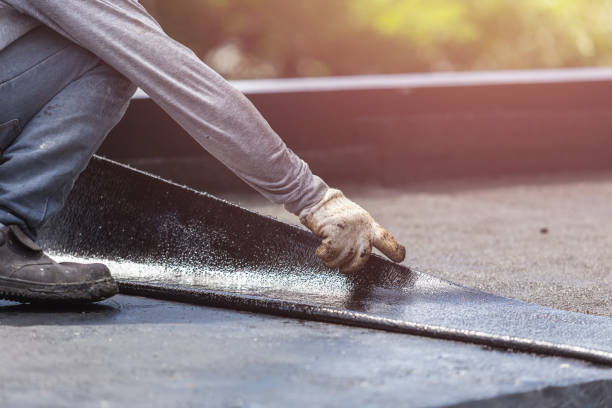
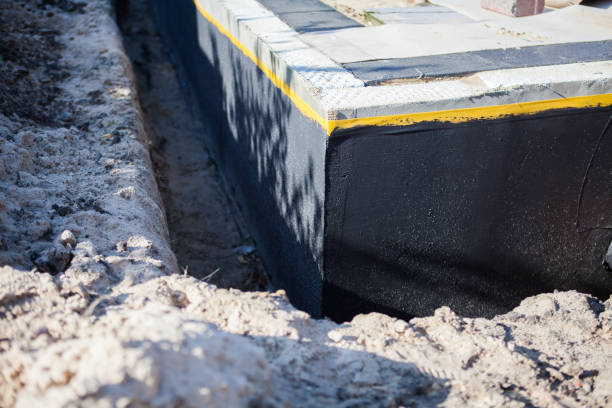
Foundation Crack Repair in Charlotte
Foundation crack repair in Charlotte, NC

Polyurethane injection is specified for cracks where flexibility is a design requirement rather than structural re-bonding. Polyurethane foam expands as it cures to fill irregular voids completely, including cracks that are not perfectly planar. The cured foam remains flexible, allowing the wall to undergo minor seasonal movement without reopening the seal -- a characteristic that makes polyurethane the right choice for active cracks where temperature-driven concrete expansion and contraction may continue. Polyurethane injection is also used in wet crack conditions because the foam reacts with water during its cure, making moisture in the crack an asset rather than an obstacle to the seal.

Soil settlement beneath footings is an independent cause of foundation cracks that requires evaluation separately from the wall repair itself. When soil compresses or washes out from beneath a footing, that section of the foundation wall loses its support and the wall may develop diagonal cracks as the unsupported section deflects downward. In these cases, crack injection addresses the symptom while leaving the root cause unresolved. Our assessment includes a review of grading, drainage, and visible footing conditions to identify signs that settlement is active. Where settlement is a factor, we coordinate the repair approach to address both the crack and the soil condition that created it, preventing recurrence after the crack is sealed.

Foundation Crack Repair Services

Six targeted repair services covering every foundation crack condition in Charlotte, NC homes.

Epoxy Crack Injection

Every epoxy injection job is documented with before-and-after photos and a report of injection pressures and resin volumes consumed to verify full crack penetration.

Polyurethane Injection

Expanding polyurethane resin fills irregular crack voids completely, including geometry that epoxy cannot fully penetrate, and cures to a flexible seal that tolerates minor seasonal wall movement without reopening.

Carbon Fiber Wall Reinforcement

Strap installation requires no excavation of the foundation exterior, minimal removal of interior finishes, and leaves a wall surface that can be painted over after the bonding adhesive cures.

Wall Anchor Systems

Wall anchors can be tightened over time as the soil condition allows, potentially restoring some of the original wall plumb position without excavation or more invasive structural work.

Stair-Step Crack Repair

Stair-step cracking in block or brick foundation walls follows the mortar joints and indicates differential settlement, thermal expansion cycling, or deteriorated mortar that has lost its bonding strength over decades.

Floor-Wall Joint Sealing

Floor-wall joint sealing is frequently included as part of a comprehensive crack repair scope because the joint is the most common source of water intrusion in otherwise structurally sound poured walls.

How We Fix Foundation Cracks

1

Structural Assessment

We measure every crack for width, orientation, and displacement, review the soil and drainage context, and classify each crack by type and severity before recommending any repair method.

2

Repair Method Selection

Written scope defines every material, method, and warranty term before you approve any work so there are no surprises on the invoice.

3

Professional Repair

Carbon fiber installations include verification of bond strength and strap spacing against the engineered design before the job is signed off.

4

Warranty Issuance

Your warranty packet includes installation photos, crack condition documentation, and recommended monitoring intervals for any cracks assessed as stable but worth tracking.

What Charlotte Homeowners Say

★★★★★

The carbon fiber repair on our bowing wall was completed in one day and was far less invasive than we expected. No excavation, no major interior disruption. The crew was professional and explained every step of the process.

Thomas & Karen R.
Charlotte, NC
★★★★★

The written quote was detailed and transparent. They explained what type of crack I had, why they were recommending epoxy over polyurethane, and what the warranty covered. That level of professionalism made the decision easy.

Sarah W.
Charlotte, NC
★★★★★

I appreciated that they did not try to upsell me on a full drain system when crack injection was the right fix for my situation. They solved the actual problem and the repair has held completely.

Mark D.
Charlotte, NC

Foundation Crack Repair FAQ

Are horizontal and vertical foundation cracks equally serious? +
Crack orientation is the most important single factor in our assessment. Vertical and diagonal cracks running from top to bottom or at 45-degree angles from corners are typically stable settlement cracks that seal well with injection. Horizontal cracks that run parallel to the ground line at mid-wall height indicate wall bowing from lateral earth pressure -- a structural condition that requires reinforcement, not just sealing. We explain this distinction to every customer during the assessment so you understand what you are dealing with.
When should I choose epoxy injection versus polyurethane injection? +
The choice between epoxy and polyurethane is a technical decision that depends on crack condition, not simply preference. We select the appropriate material at the assessment phase and explain the reasoning in your written quote. In some cases, a combination approach is appropriate -- for example, injecting polyurethane to stop active water infiltration, then following with epoxy after the wall has dried to achieve a structural bond.
How much does foundation crack repair cost in Charlotte, NC? +
Foundation crack repair costs in Charlotte vary significantly based on what type of repair is required. A single poured concrete crack sealed with polyurethane injection is generally the least expensive repair we perform. Multiple crack injection on the same wall project reduces per-crack cost. Carbon fiber reinforcement for a bowing wall is a more significant investment that reflects the engineered materials and the structural outcome being delivered. Written itemized quotes are issued after every free assessment so you have a clear basis for comparison.
What are the signs that my foundation crack is getting worse? +
The clearest signs of an active, worsening foundation crack are increased crack width since you last measured it, new cracks forming in locations where the wall was previously intact, visible inward bowing of the wall face, cracking that has propagated to interior floor surfaces adjacent to the wall, doors or windows in the above-grade structure that have begun sticking, and active water infiltration at a crack that was previously dry. Any of these signs warrant a professional assessment, not just monitoring.
How long does foundation crack repair take? +
We confirm the project timeline in your written scope before scheduling. Foundation crack repair does not typically require residents to vacate the property during the work, and most projects have no debris that requires extended cleanup.
Why is DIY foundation crack repair risky? +
DIY foundation crack repair products available at home improvement stores are surface sealers and hydraulic cements that address the visible face of the crack without penetrating or bonding the full depth of the wall. A surface seal on a crack that is actively moving will fail within a season or two as the movement reopens the seal. More importantly, DIY approaches do not include the structural assessment needed to determine whether the crack is a cosmetic issue or a sign of an active structural problem that requires reinforcement. Applying surface paint over a bowing wall crack, for example, delays the identification of a condition that should receive professional repair before it progresses further.
Charlotte (/ˈʃɑːrlət/ SHAHR-luht) is the most populous city in the U.S. state of North Carolina. Located in the Piedmont region, it is the county seat of Mecklenburg County. The population was 874,579 at the 2020 census, making Charlotte the 15th-most populous city in the U.S., the seventh-most populous city in the South, and the second-most populous city in the Southeast behind Jacksonville, Florida. The city is the cultural, economic, and transportation center of the Charlotte metropolitan area, whose 2020 population of 2,660,329 ranked 22nd in the U.S. Metrolina is part of a sixteen-county market region or combined statistical area with a 2020 census-estimated population of 2,846,550.

Zip Codes in Charlotte, NC that we also serve: 28269 28262 28105 28280 28282 28209 28208 28205 28204 28207 28206 28203 28202 28223 28227 28226 28278 28270 28273 28274 28277 28134 28216 28217 28214 28215 28212 28213 28210 28211 28244 28126 28130 28201 28218 28219 28220 28221 28222 28224 28228 28229 28230 28231 28232 28233 28234 28235 28237 28241 28242 28243 28246 28247 28253 28254 28255 28256 28258 28260 28263 28265 28266 28271 28272 28275 28281 28284 28285 28287 28288 28289 28290 28296 28297 28299

Cities Close To Charlotte, NC That We Also Serve


Foundation Crack Repair Express #1
★ 4.9 (120+ Reviews)
Dispatch Center, NC
Call +1-866-476-1348
Foundation Crack Repair Express #2
★ 4.9 (120+ Reviews)
Dispatch Center, NC
Call +1-866-476-1348
Foundation Crack Repair Express #3
★ 4.9 (120+ Reviews)
Dispatch Center, NC
Call +1-866-476-1348
Foundation Crack Repair Express #4
★ 4.9 (120+ Reviews)
Dispatch Center, NC
Call +1-866-476-1348
Foundation Crack Repair Express #5
★ 4.9 (120+ Reviews)
Dispatch Center, NC
Call +1-866-476-1348
Foundation Crack Repair Express #6
★ 4.9 (120+ Reviews)
Dispatch Center, NC
Call +1-866-476-1348

Cracks Don't Heal Themselves -- Fix Them Right the First Time

Don't let a small crack become a structural emergency. Contact JCB Waterproofing and Construction for a written evaluation and quote in Charlotte, NC.

Call +1-866-476-1348 Now
Our Services in Charlotte, NC

☎
🟢 Techs On Duty in Charlotte, NC Call +1-866-476-1348